

This is part one of a three-part deconstructive analysis of The Last of Us: Part II. Find part two, about how this game fails to utilize its mechanics to tell its story, here. Find part three, about how horrible the story is as a whole, here.
I originally posted this essay to Reddit in 2020, where it received some attention and led to me launching my own website. It is safe to say I have grown as a critic since then. My opinions on this game, however, have not changed. I have therefore decided to remaster this essay and its two sisters; after all, if The Last of Us: Part II is old enough to receive a remaster, isn’t its criticism?
Ellie is not in Part II
The Last of Us is about Joel and Ellie. There is no way to describe the first game that does not express the core of an evolving father-daughter bond. These characters are the father and daughter. Although we play as Joel for most of the game, Ellie is the deuteragonist who transcends her NPC beginnings and becomes the protagonist in the new stasis. She concludes the story as the new player character.

At the start of The Last of Us: Part II, Joel is brutally assassinated by someone named Abby who was never mentioned in the last game. This marks the point of no return. Joel can never be our player character again. We will never return to his body. It is Ellie only from now on (or so you would think).
Yet it seems that we would never return to Ellie’s body again, either. Because while Part II begins with Joel’s heinous murder, this crime pales in comparison to the vicious character assassination Ellie suffers over the course of the next thirty hours of play.
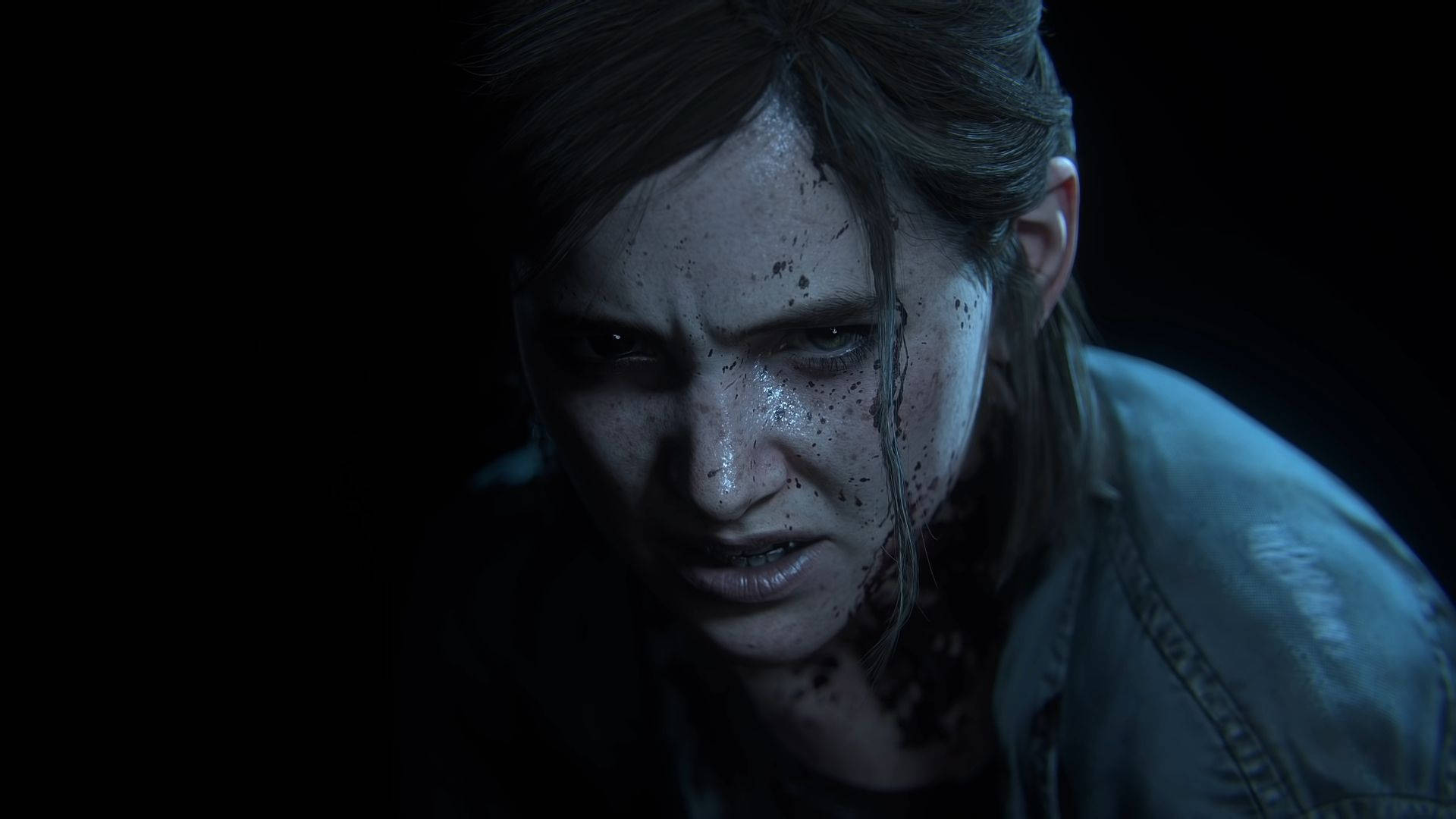
Ellie from The Last of Us is not in The Last of Us: Part II. But someone with her face and voice is.

What does survival mean?
Throughout The Last of Us, the most important theme is survival. That he is a survivor is Joel’s refrain. It is his penultimate line to Ellie overlooking Jackson. Joel will do anything to survive. That is what it means to live in the post-apocalypse. I have written more about this in Part III of this series.
Ellie’s arc is learning to become a survivor. At the beginning of the game, she recoils and swears when she witnesses acts of extreme violence. She is horrified and frightened by the apocalypse. By Winter, she is capable of violence herself, and she no longer flinches when she is forced to kill. The combination of her own strength of character and Joel’s instruction gives her the power to outwit dozens of older, more powerful men while she is still a child.
This is who Ellie is. She is incredibly badass. She is extraordinarily competent. She is a video game protagonist.
This character could have been a generic “girl boss” Mary Sue. She could have been the kind of protagonist that makes gamers roll their eyes and want to get back to Joel. She is good at everything, in every situation.
Instead she is—or once was—one of the most universally beloved protagonists of all timeokay .
Why does she work?
Ashley Johnson is part of the reason. I believe that Ellie exists mostly in the mind and body of Johnson. I have no desire to analyze the nuances of anyone’s acting on this blog; given that she won a BAFTA for the game, I think the quality of her performance can be stipulated.
What I can analyze is the depth of her portrayal. Ellie is a character with tons of personality and incredible amounts of psychological baggage. The real reason she works so well is because she is easy to understand. Her motivation is simple, and it is stated multiple times throughout the game: she is terrified of being alone, and she is guilty for her own survival.
The ending of The Last of Us cannot be understood without these two parts of her character. Ellie tells us explicitly before Sam’s death that her number one fear is “being by myself… ending up alone.” In the game’s epilogue, she says:
Back in Boston -- back when I was bitten -- I wasn't alone. My best friend was there. And she got bit too. We didn't know what to do. So... she says "Let's just wait it out. Y'know, we can be all poetic and just lose our minds together." I'm still waiting for my turn.
I believe that Ellie knows Joel is lying when he swears that the story he has told her is true. She clearly suspects that he is lying, since she felt the need to ask. But she accepts the lie anyway. She has to accept the lie, because if she doesn’t, she will be alone again, and that would be worse than dying in Salt Lake City.
Her fear and her survivor’s guilt are really two elements that form the singular core of her character. They explain every action she takes. They are what make her feel real. Her guilt connects her back to the theme of survival, obviously: Joel “struggled for a long time with surviving,” just like her. Will Ellie have to become like Joel, an emotionally shut-off butcher, in order to stay alive? Is that what it will take?
This was where the potential for a sequel lay: expanding Ellie’s psychological depth, exploring the long-term implications of her arc from the first game, and examining once again the theme of what it means to survive in the post-apocalypse.
You would not know any of this if you had only played The Last of Us: Part II, though, because none of what I’ve just discussed is present there. Ellie no longer has survivor’s guilt. It is never mentioned, and it never manifests subtextually. As for her fear of being alone, she must have gotten over it in the time between the games. When she finds out Joel lied—something she must have known already, as above—she abandons him and goes to live alone. She has no problem going on adventures alone. She’s even willing to give up her family with Dina, guaranteeing eternal loneliness, in order to seek out the revenge she has already failed to enact.
Apparently her conversation with Sam was a lie. Also, the ending of the last game makes no sense. Don’t worry about it.
Because the core of Ellie’s character was eliminated, she had to be totally reinvented into a new person. This new person has, effectively, nothing whatsoever to do with the girl from the first game. Although they share a model and a voice, they are completely different people.
For convenience, I will be referring to this strange doppelganger as Fake Ellie from here on out.
Fake Ellie
It would take more than one essay to illustrate the depth of Ellie’s character in the original The Last of Us. One trait that is evident throughout the game is that she is tremendously empathetic. She talks about her feelings openly and easily relates to a diverse range of characters, some younger than her and others much older. She remembers the people she has met and carries mementos of them, like Riley’s dogtags and Sam’s toy. She is fundamentally moral; she is even disgusted when she learns that Joel was a bandit.
This is who Ellie is.

Fake Ellie’s behavior in Part II can only be explained by the diagnosis of antisocial personality disorder. Her psychopathy is far beyond the anger that naturally comes while seeking vengeance. Even after having weeks to calm down, when her fury should be cold and calculated, she tells Dina that she would happily torture an innocent person—rather than see that same person go to trial. She later fulfills her desire for torture on Nora. She does not hesitate to massacre countless innocents (and their cute dogs) on her quest and never considers the consequences. Her utter obsession with vengeance is maniacal and shows none of the intelligence or conscientiousness that Ellie from the first game demonstrates in every scene.
Fake Ellie is clearly obsessed with Joel and his horrific murder. They gave her good reason to be. It was a scene so memorable that it galvanized the playerbase into weeks of outrage. One receives the impression that she is meant to have PTSD, especially in the third act as she returns to the farmhouse.
I get it. The prolonged torture of a father figure is probably a pretty traumatic event. It’d give me PTSD too.
Except Ellie already had PTSD. You know, from that time that Nolan North tried to rape and cannibalize her, and she had to kill dozens of his goons when she was fourteen years old? Do you remember when that happened?
That’s the kind of thing that usually leaves a mark. It transforms her personality after you get to Salt Lake City. It’s a shame that Neil Druckmann and Halley Gross forgot that it happened.
Ellie’s tragedy is that she completes her journey and still loses what she’s been fighting for. She doesn’t know why she has survived. This is fertile ground for storytelling in a sequel. Her new arc would be a perfect mirror for Joel’s in the first game: she starts with nothing to live for, but discovers it over time. After all, isn’t that what Joel says to her? That needs to find something new to fight for?
But I sincerely believe that Halley Gross and Neil Druckmann never played The Last of Us. They were not aware of Ellie or her original character arc, and so they did not pick up where that story left off. Thus they never mention the events of Winter. They never explore the trauma of the first game. Instead, they use its famous ending as an excuse to contrive new trauma for their new story, even though it makes no sense.
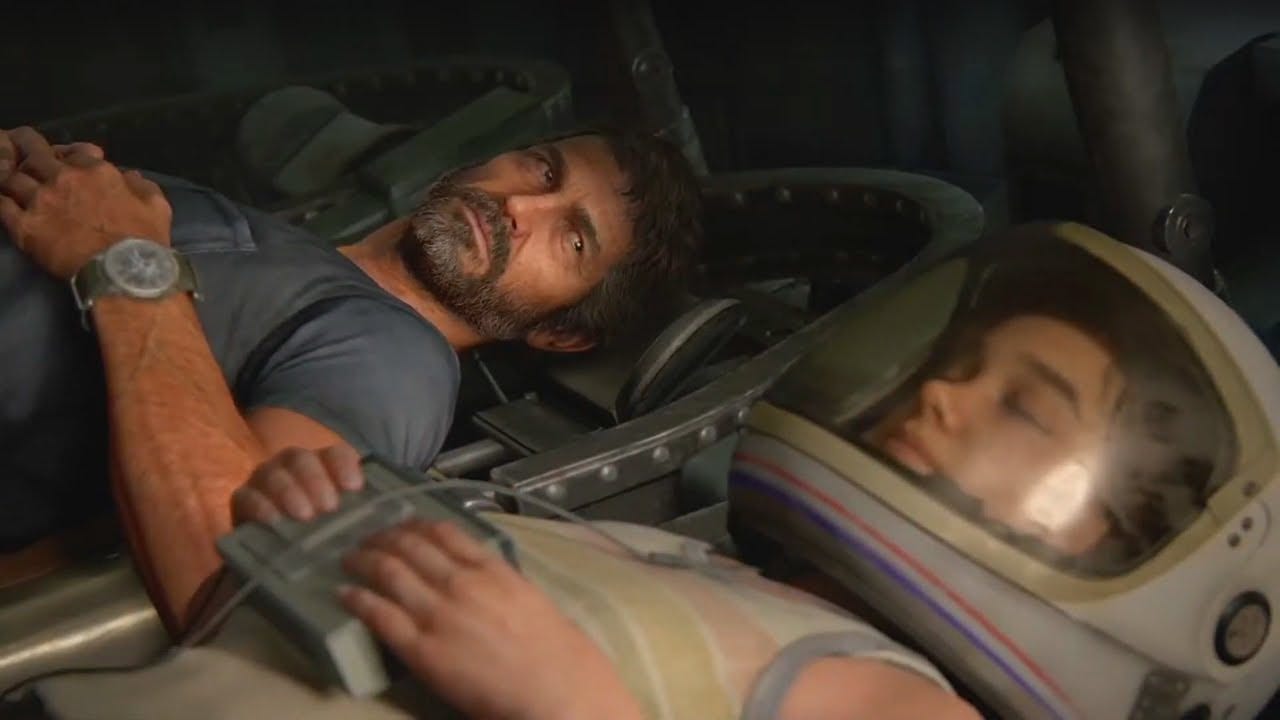
Fake Ellie has actually recovered from the horrors of her cross-country roadtrip. Riley is never mentioned once. The flashback sequence with Joel at the science museum shows us a character who acts just like the 13-year-old Ellie from “Left Behind.”
That flashback is beloved by fans. And it’s cozy and nice to see that character again. But 13-year-old Ellie is dead by this point in the story. She does not exist. She should not have been able to enjoy this day with Joel in this way. This entire sequence rings false. This is simply not who Ellie is after the events of the first game. The real Ellie is more somber, more mature, and less carefree.
She can have wit. She can have sparks of mirth. She certainly shouldn’t lose her personality. But she will never be a little girl again. This is the character we see during and after Winter.
The way that Fake Ellie is written at the museum is a very minor issue compared with the rest of the game. The actual problem is that Neil and Halley decided to turn Ellie into a complete and total moron.
The character we see in the first game is brilliant. She always makes the right decisions. She is articulate, clever, and witty. She expertly navigates every challenge placed before her, without help, using brains instead of brawn.
Dumb people do not make it in the apocalypse. Ellie earns her survival with her intelligence.
But five years turned her into a fucking imbecile. Let’s compile a list of some of the decisions this once-smart character makes in Part II:
When she sees Abby standing over Joel through a doorway, she decides to lower her pistol and walk through that doorway to let herself get caught.
She utterly mishandles her confrontation with Mel and Owen in the stupidest way ever that makes no sense and leads to pointless slaughter.
After having been caught by the WLF no fewer than two times, she circles her secret hideout on her map for no reason, thus giving away where Dina is hiding.
She then forgets her map at the Aquarium, at the perfect moment for Abby to find it.
Rather than shooting Abby when she barges into the theatre lobby, she lowers her pistol and drops her gun for no reason.
She goes back to the hospital in SLC, even though she surely knew she was not going to like what she found.
Conveniently this all happens in a flashback with no conflict, no explanation, and no justification.
Despite her fear of loneliness, despite her survivor’s guilt, and despite all of her empathy, she blames Joel for saving her life, as though she can’t understand why he did it.
She somehow loses to Abby while Abby has no gear, then decides to go fight her again after being spared.
She can't figure out how to play the guitar minus two fingers, even though it wouldn’t be that hard.
She shows no mercy to countless hapless NPCs, despite the fact that they're generally easy to avoid and that they surely all have families too, but does show mercy to a psychopathic murderer whom she knows nothing about.
Many of the bullet points above are in fact not Fake Ellie behaving like an idiot, but simply fault lines in the badly written connective tissue of this overlong and poorly scripted game. It is nevertheless true that the entire story fundamentally comes down to Fake Ellie acting like a moron or making ridiculous mistakes, like forgetting her map in the worst place possible while also circling her own secret hideout, so that she can be defeated and all of her friends can be slaughtered.
It is never good to have a story propelled by the main characters acting like idiots. But at least we can say that, in real life, many people are, genuinely, idiotic.
But Ellie isn’t an idiot. Ellie is smart. She is the worst possible character to put at the center of an idiot plot.

Neil Druckmann was desperate to shock players by having Abby murder Joel in an overwhelmingly violent way. Why he wanted to do this is anyone’s guess, but he undoubtedly succeeded. Yet the consequences of this decision manifest everywhere throughout Part II. One of them is that the initial audience impression of Abby is so incredibly bad that, when she is later turned into a protagonist, we need our relative opinion of her to have been raised by our opinion of Ellie having fallen.
Thus the reason why Fake Ellie is such an idiotic psychopath is because she is effectively behaving as a counterbalance for the murder of her own father figure. She has inherited Abby’s psychopathy, because if she didn’t, we would like her too much. We can’t like Ellie too much, because we have to like Abby more!
Similarly, Ellie was too competent in the first game. That character would have killed Abby either immediately or at the midpoint. But that was not the story Neil Druckmann wanted to tell. Ellie had to be nerfed.
When this game came out, there was a tremendous amount of outrage over the decision to kill Joel. I was outraged, too. I may still be. But not because of that. Telling a Heart of Darkness revenge story for an iconic character like Ellie, following her as she descends into viciousness and insanity, is interesting. It could work in a brutal and violent world like The Last of Us. It is not what I would have done. But it might have been workable.
Totally transforming her character was never going to be workable. Fake Ellie is not Ellie. Ashley Johnson is still a great actress, and she is the sole reason why Fake Ellie’s sections are somewhat playable. But the character is completely unrecognizable. She behaves like a different person. She acts in a manner that brings about the game’s conclusion, simply because that is the conclusion Naughty Dog wanted. She never behaves like she would have in the first game.
How should a character speak?
To further illustrate how badly Part II fails Ellie, I would like to compare dialogue scenes from the first and second games.
Part I
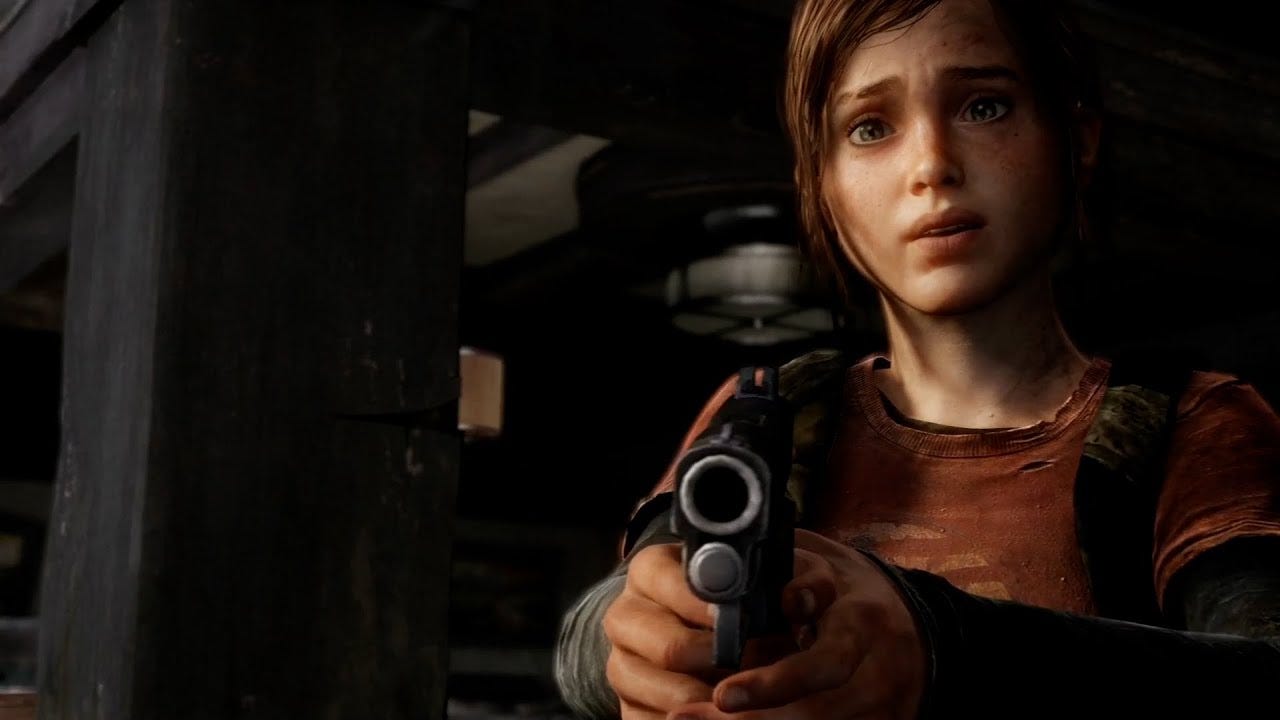
Pittsburgh: Hotel Lobby. Ellie saves Joel’s life and kills her first human being.
ELLIE: Man, I shot the hell outta that guy, huh?
JOEL: Why didn’t you just hang back like I told you to?
ELLIE: Well, you’re glad I didn’t, right?
JOEL: I’m glad I didn’t get my head blown off by a goddamn kid.
ELLIE: You know what? No. How about, “Hey Ellie; I know it wasn’t easy, but it was either him or me. Thanks for saving my ass!” You got anything like that for me, Joel?
JOEL: We gotta get going.
ELLIE (sighing): Lead the way.
This seven-line exchange tells so much about this character.
#1. She won’t be pushed around.
Ellie is spunky and has a strong moral center. When she perceives something to be wrong, she stands up for herself. She won’t let Joel be a hypocrite.
#2. She has personality even when things are fucked up.
Ellie’s first line in this scene is a joke. Trauma does not turn off her personality.
#3. She is fundamentally loyal and obedient.
Even after Joel has been an enormous asshole to her, Ellie knows that she needs to trust him to survive. She makes her dissent clear and then decides to follow orders anyway. Her line for him to “lead the way” shows us this. Ellie is not an asshole who starts fights for no reason.
Part II
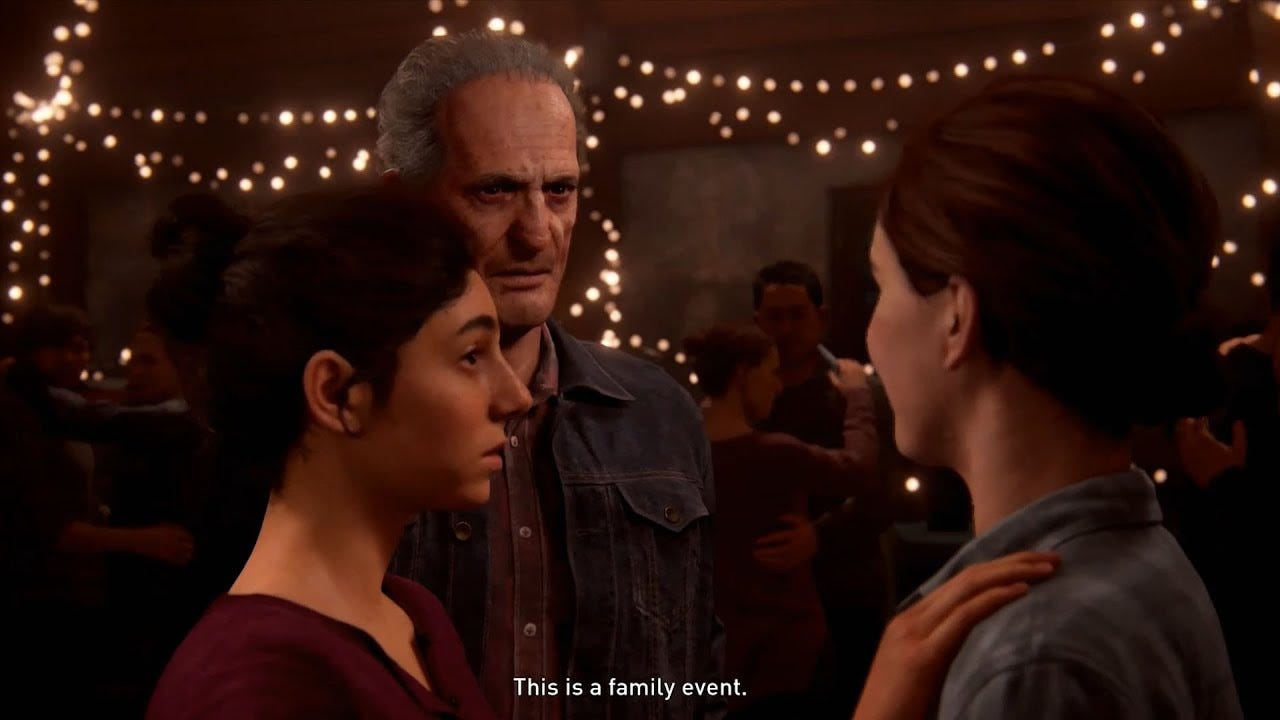
Seth has called Ellie a “dyke.” He gives her a sandwich to apologize.
MARIA: Seth has something he wants to say to you.
FAKE ELLIE: I don’t want to hear what that bigot has to say.
MARIA: Do it for me. Please.
FAKE ELLIE: Fine.
...
SETH: Hey. Look, last night, I was drinking...
FAKE ELLIE: Sure.
SETH: I’m trying to say I’m sorry. Maria tells me that you and Dina are heading out? I, uh, made you some sandwiches.
FAKE ELLIE: Okay.
SETH: They’re steak.
MARIA: Thank you, Seth.
SETH: Yeah, well, uh, you be safe out there.
FAKE ELLIE: Yup.
...
JESSE: What have you got there?
FAKE ELLIE: Bigot sandwiches.
JESSE: Mhm. Smells good.
FAKE ELLIE: They’re yours.
This is one of the earliest scenes in the game, and I knew they had Ellie wrong immediately. Everything about this is off.
#1. Real Ellie would have said...
“Fuck you, man, it’s none of your business who I kiss.”
We know exactly how this girl talks. She is apparently more independent now than ever before and comfortable living alone. The notion that she would respond to being called a “dyke” with anything other than mocking derision is ridiculous. The character in the above quoted scene is simply not the girl seen below:
#2. Real Ellie wouldn’t have given a fuck.
This girl has gone through more than anyone could ever imagine. She wouldn’t give a fuck about Seth. People who have been nearly cannibalized are not offended by the word “dyke” and do not consider bigotry to be the world’s largest problem; these are the concerns of Hollywood screenwriters, not the inhabitants of the post-apocalypse.
On the off-chance she did care about Seth, she would have been fine with his apology. Real Ellie isn’t vindictive. Like we see in the scene from the first game, she doesn’t hold a grudge: she forgives Joel after he concedes that it was “either him or me.”
#3. Real Ellie isn’t a boring moper.
Ellie is sometimes mopey in the first game, but she’s never boring. When she is triggered, she gets angry, not sad. Look at her dialogue in this scene. It has no voice or personality. She says nothing back and lets herself be talked at. Why is she so quiet? Why doesn’t she stand up for herself? This is before Joel is killed!
#4. Real Ellie would have eaten the sandwich.
When she’s imprisoned and starving in Winter, David feeds Ellie what is potentially human meat. He says it’s deer; she says, “With a little human helping on the side?”
Then she eats it anyway. Because Ellie is practical and pragmatic. She doesn’t care if it’s potentially human; it doesn’t matter. Eating it will help her survive.
But five years later, I am meant to believe that this same person refuses to eat a nice, well-meaning steak sandwich, once again in winter, made at no doubt great cost, because it’s a “bigot sandwich?”
Is that a joke? Did they actually write that?
This is not Ellie.
Depressed people do not need to be boring
Fake Ellie is very sad in Part II. Anger and grief are her defining character traits. What is most notably missing from her personality is her sense of humor.
Though not yet tested as a survivor, the Ellie we meet in Boston has still been raised in the post-apocalypse. She has lost people already. She has seen horrible things.
She still has a sense of humor. She loves puns. She makes jokes, and she snarks when she’s feeling catty.
This is why people like Ellie. Her humor makes her enjoyable to be around. Vitally, Ellie’s sense of humor is not Whedonesque bathos; it is diegetic dark comedy, and sometimes childish playfulness, that really represents her personality. It is part of what makes her feel so real.
Fake Ellie has become utterly depressed. She is so sad now that she has, of late, lost all of her mirth, and forgone all custom of exercise.
That is a line that Hamlet uses when referring to his own depression. Hamlet and Ellie are similar in a number of ways. They are both brilliant and depressed teenagers. They are both great warriors who have lost parents. They were both chosen by destiny to go on great adventures: for Hamlet, it was his birth; for Ellie, it was her bite.
But here is something you may have forgotten about Hamlet since you pretended to read the play in high school:
Hamlet is funny.
Hamlet’s diegetic sense of humor is the character’s most distinctive quality—even after he has “lost all his mirth.” He has a towering wit that constantly fires at the people around him. His first line in the play is literally a pun:

Yes, the very first line of the most famous character in literary history is a pun. It will not be his last.
Depression is horrible. It can sap anyone of her will to live. But what it does not do is rob her of all sense of humor. Depression does not equate to endless moodiness. Fake Ellie can be sad, but that does not mean that she cannot have a personality. She can still find humor in dark places. She can still quip. She can even be spiteful about it. But she should still talk like Ellie!

Hamlet finds dark humor everywhere in Elsinore. In fact many sad and disturbed revenge story protagonists possess vivid senses of humor. Sweeney Todd’s love for puns comes to mind.
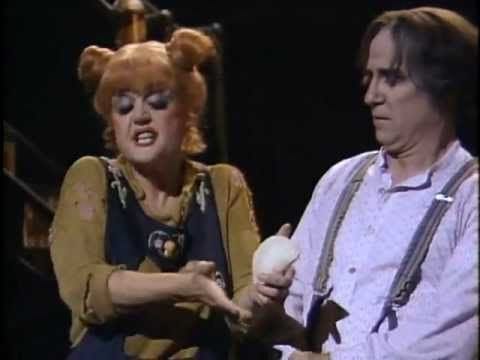
Ellie already had a vivid sense of humor. Where did it go? Why is she so serious now? Why won’t she make a fucking pun?
This comes down to personality. Fake Ellie has no personality. She has four traits. She is:
Traumatized
Really, really sad
Clinically psychopathic
Gay
There is nothing else to her. There is no voice to her dialogue. She has devolved from the most vividly animated character in any game ever made to the caricature of an antihero. It does not matter how serious your game is, how mature its themes are, and how realistically its NPCs cry out for help while being dismembered; it is still a work of fiction, and the audience still has to want to spend time with your lead characters. They must be fun, or they must be interesting. Ellie was both. Fake Ellie is neither.
The Last of Us: Part II could have had a wonderfully told story in all other respects. Fake Ellie alone would have damned it.
Alas, my essay on her is the shortest of the three I have written about this game.