

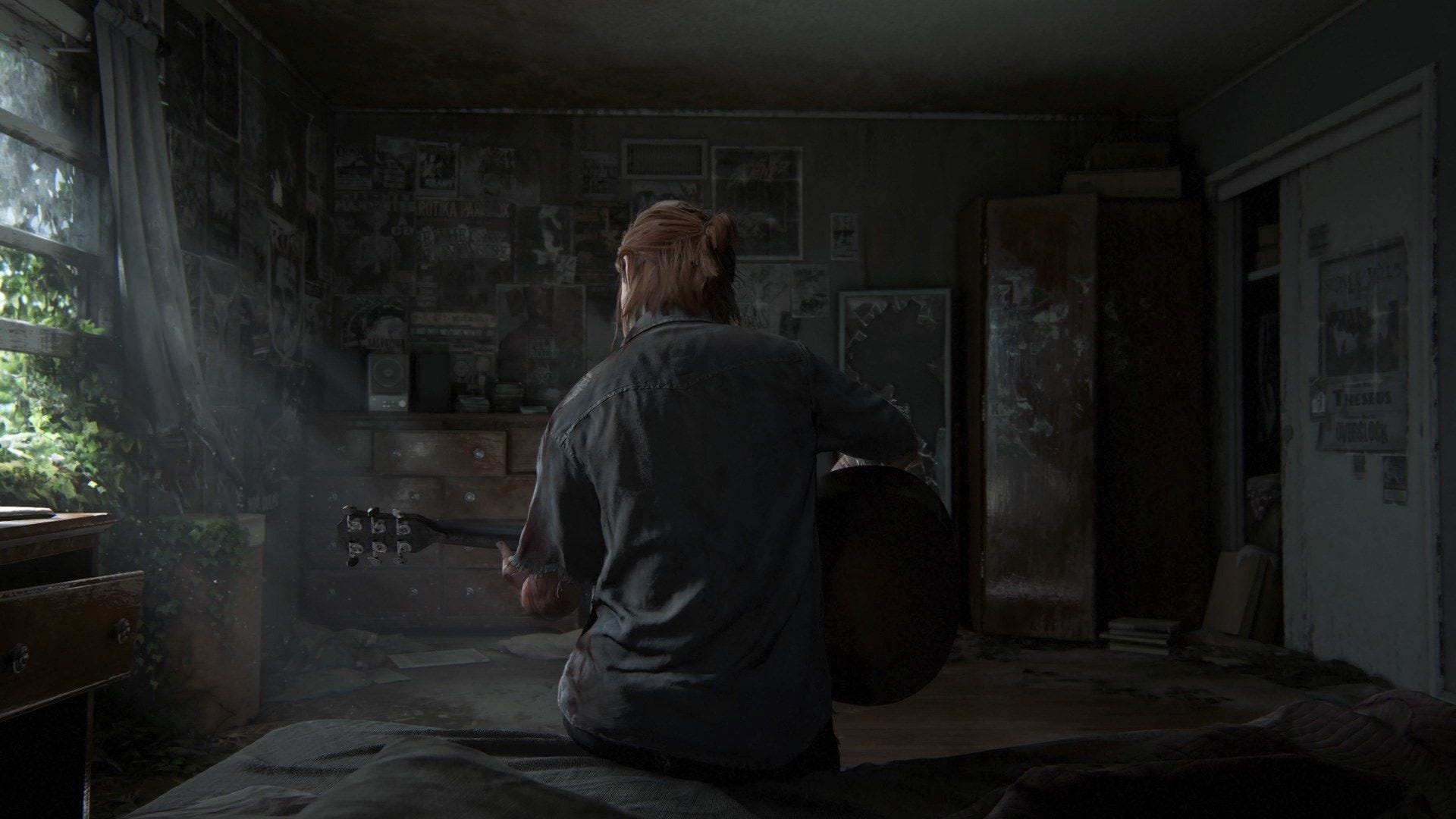
This is the remastered version of part three of my three-part deconstructive analysis of The Last of Us: Part II. Find part one, about Ellie's misrepresentation, here; find part two, about how this game fails to utilize its mechanics to tell its story, here.
Two games in one
In an interview with IndieWire right after The Last of Us: Part II’s release, Neil Druckmann said:
You’re already connected to Ellie and Joel from The Last of Us, so we put them through a very tragic event, give you one look at a quest for revenge, and then shift to Abby in order to tell a mirror story of redemption that follows the person who — by killing Joel and avenging her father — has already accomplished what Ellie is trying to do, and is struggling to come to grips with it.
In The Last of Us: Part II, we play about fifteen hours as Fake Ellie, then suddenly shift to play about fifteen more as Abby. The intention is clearly to do exactly as Druckmann says. Indeed when it is described in his terms, it sounds like a compelling story.
Unfortunately, the game Druckmann describes is not the game Druckmann made. The decision to make Abby playable at the midpoint is a stunning defect in storytelling that utterly ruins the pacing of this game, robs all hope of investment from the player, and turns its back half into a boring slog. The structure of Abby’s sections in no way mirrors Fake Ellie’s, and it is stuffed with filler strung between overlong levels and badly written confrontations.
Neil Druckmann wanted to make a game about two opposing forces, their stories told in parallel. This is not a terrible idea. It could have been good. For this essay, I want to stipulate that it is not necessarily the ideas themselves that spoil The Last of Us: Part II, but how they are executed at every level of narrative. Anyone can argue about whether it was a good idea to retcon Abby into existence or kill Joel off in a cutscene. Many other critics have done this already, and there are excellent writers who have deconstructed this game elsewhere online. What interests me are those things that are not a matter of taste. My question is whether or not the conventions of storytelling were effectively used in The Last of Us: Part II to convey Druckmann’s ideas.
They were not. That is the real reason why this game is so controversial.
A story told backward
The presentation of Part II’s story is engineered to create player apathy. The game presents itself in two major halves: when Fake Ellie’s section is concluded, time is rewound, and we see those three days again from Abby’s perspective. These segments are completely cordoned off from one another. The conclusion takes place in Santa Barbara under Fake Ellie’s control.
This structure frames Abby’s sections as a flashback. Although this might have worked under different circumstances, it does not work for this game. It is obvious that Abby’s player character status was intended to be a big twist. But turning the back half of the game into a gigantic flashback means that we are expected to immerse ourselves in Abby’s world after we know the outcome of the plot. We are expected to learn to care about the lives of Mel and Owen and the rest of her friends after we have learned that they all die pointlessly in cutscenes.
This single baffling decision is the fundamental rot of the entire game’s plot structure. There is no mystery or tension in Abby’s scenes because we know that nothing goes anywhere. Why befriend people you know are going to die?
Letting Fake Ellie’s and Abby’s sections play out concurrently would have let the tension build. Owen’s death would have been much more impactful if we had cared about him when he died. We would have held it against Fake Ellie, maybe, if he had been more than another random NPC.
Instead, the story was constructed in an incredibly counter-intuitive way. The results are disastrous.
This is not a mirror
The flawed structure was going to be impossible for almost any story to overcome. There still might have been something to the game’s concept if, as Druckmann says, Fake Ellie and Abby were on mirrored journeys. We have his own words assuring us that this was his intention as a writer. But he defeated his goal from the very start of the game. These characters are on completely different character arcs.
Abby begins the game seeking to avenge her father. She achieves this almost immediately after we meet her. Afterward, she has no goal whatsoever. We do not meet her again for over a dozen hours. When we do, she still has no goal; she has accomplished her main task in life.
Fake Ellie begins the first act seeking justice for Joel. Though this is superficially similar to Abby’s goal of vengeance, the fact that both want to avenge the death of a father figure does not actually make their goals morally equivalent.
Abby’s assassination of Joel is one of the most reprehensible acts ever put into a video game. Not only does she torture Joel to death with a golf club, but she does so after he has literally saved her life in a selfless act of heroism. Her decision to murder Joel this way is in no way a reasonable person’s response in her circumstances, and it is not equivalent to what Fake Ellie intends to do to Abby when she finds her.
In the first game, Joel kills Abby’s father after he leaps in front of him with a scalpel. This occurs while he is trying to remove the brain of a living child, who happens to be Joel’s surrogate daughter.
There are many differing opinions on whether or not Joel made the correct decision at the end of the first game. Whatever your opinion is, it is nevertheless the case that Joel only killed Abby’s father because he was in his way, and because he was going to kill Ellie. Legally, he was undeniably acting in defense of himself and another.
Joel does not kill Abby’s father out of anger or hatred.
Abby is aware of this when she tracks him down. She does this over the course of years, and she ventures across multiple states searching for him. I can understand why she would feel the need to do this. I might even feel the same way in her situation. But this is not justice. It is vengeance, and it is petty. There is simply no equivalence between this act and killing someone threatening your daughter.
Abby comes across as gleefully evil in the prologue. She shows no hesitation and no remorse as she enacts her vengeance. She is literally psychopathic. The person we see here, in fact, has nothing to do with the person we see in her playable sections. They behave like totally different people. If the intention is that she has undergone some kind of arc, they must have forgotten to write that into the game.
I understand Abby’s behavior. But I could never justify it. It is morally reprehensible, and made so much worse because it is a betrayal of the man who just saved her life.
Consider Fake Ellie’s perspective. Abby knew why Joel killed her father. Fake Ellie knows nothing at all about Abby. She only knows that a psychopathic assassin on steroids is going around executing innocent people across Wyoming. There is no appropriate response to this except to want justice. It would be outrageous not to try to hunt Abby down.
When we reach Seattle, we learn about the WLF. It turns out they are a paramilitary organization that is responsible for all manner of atrocities, according to notes found in the environment. This is even more reason to take Abby down.
This is why drawing parallels between these characters is false. There is no moral equivalence from their subjective points of view. Fake Ellie and her friends are clearly the relatively virtuous side of this conflict, and it is no wonder that everyone sides with them.
Human beings hate murderers, turncoats, and adulterers instinctively. Abby becomes all three over the course of this game.
Our first impression of a character is vitally important. The most influential book in modern screenwriting is called Save the Cat. Establishing an empathetic bond between the audience and the protagonist is the first goal a screenwriter should have. If you show the hero saving a cat, audiences will like him.
This is why Sarah dies in the first game’s prologue. She is the cat that Joel cannot save. This trauma builds the bond between Joel and the player. That bond will last for the entire game, and it helps us stay on Joel’s side even when he does very bad things.
“Murder the father figure” is the opposite of saving the cat. If you want us to legitimately like this character, you cannot introduce her this way.
I do not mean to suggest that the story could not have been told at all. In fact I believe that Joel probably had to die, and small changes to Abby and this sequence could have fixed much of the game to follow.
The torture of a beloved character is one of those things that cannot ever be forgiven. I cannot believe I actually have to write this. My memory is not so short that I can learn to like her after I learn that she has a dog. I wouldn’t have liked her if she had a whole litter!

Druckmann wanted the beginning of his game to be shocking. He wanted us to feel Fake Ellie’s anger. But he also wanted us to be able to zoom out and view Abby objectively, to reset to a blank slate the moment his game asked us to.
This is not how storytelling works.
The Georgian Parable
There was once a boy named Joe Jughashvili in the Russian Empire. This young man had a troubled upbringing. Born in Georgia in 1878, he was raised by a miserably poor family. His siblings died in infancy. His alcoholic father beat him and his mother mercilessly. He struggled with chronic illness and homelessness throughout childhood. He became a seminarian but was expelled before ordination as a priest. His salvation finally came when the political climate began to shift, and he found an opportunity to rise above his lowly station.
His origins were horrific. But through his work in politics, young Jughashvili would ultimately become one of the most influential people of the 20th century.
You probably aren’t familiar with his birth name. I’m sure you’ve heard of his pseudonym, though.
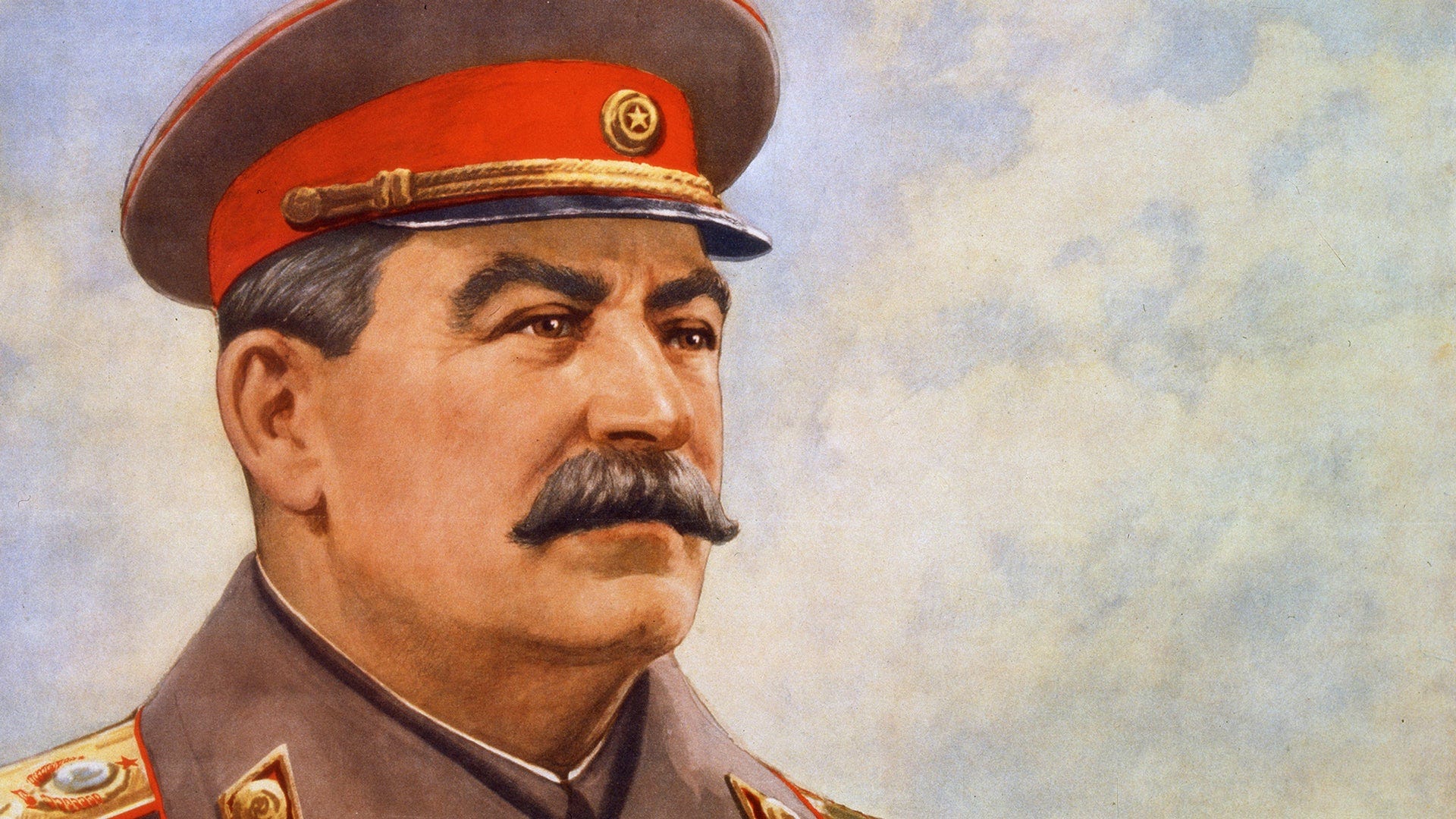
Joseph Stalin is a fascinating character. His upbringing certainly had a tremendous effect on him, and thus on the world. Students of history should try to understand what made him who he was. In fact, I can imagine a film about Young Stalin that turns him into a compelling protagonist. He could be made into someone extremely sympathetic. You would want him to succeed.
But when you learned his identity in the end, you would be horrified. Because having a tough life and being relatable do not excuse atrocity. Morality is not that simple.
This film would not work if it began in a GULAG full of starving political prisoners. You would never learn to care about Joe if you knew he were a monster from the start. His misfortune would seem well-deserved. It would be a totally different movie.
This is, in effect, what Naughty Dog asks the player to do in The Last of Us: Part II. We must empathize with Abby because she is human. But everyone is human, and some people really are bad.
Abby is really bad.
“But what about Fake Ellie?” I hear you cry. “Fake Ellie is bad too!”
You’re right. Fake Ellie is bad. But she’s only bad in this game. Empathy has been effectively established before we start seeing her do bad things. We’re expected to learn about how human Abby is after we see that she’s a psycho. That is why people do not like her.
There could have been reasons to like Abby. If she were filled with remorse, her sequences would have been entirely changed. She could have been haunted by nightmares of Joel’s screams and Fake Ellie’s tears. She could have regretted her actions at every moment. That would have been tragic, and it would have made it harder to hate her. What if she had killed Joel accidentally, or changed her mind after pulling the trigger, like Burr at the end of Hamilton?
Druckmann seems to think Abby is depicted this way. But she is not. Joel is barely mentioned and does not weigh on her playable days. In fact, that she has completed her vengeance has no bearing at all on her adventures with Owen, Lev, Yara, and friends. It legitimately seems like the game about Abby was developed independently of the game about Fake Ellie.
Nothing in her first and second days would have changed if Abby had never gone to Jackson.
Own goal
Characters need goals in fiction. Goals create conflict, and conflict creates stories.
Fake Ellie has an excellent goal in this game: kill Abby. This is relatable and easy to understand. We know how to work toward it, and we will know when it is done. When a character has a goal, it establishes something called “rooting interest:”
If you do not have rooting interest in a character, you will be bored by her. More importantly, a character without a goal cannot find conflict, and thus will have neither story nor gameplay.
Abby accomplishes her goal before her story begins. Then she has nothing to want. Her sections are subdivided into objectives, but she has no singular overarching goal except to survive. Our first day adventuring with her is entirely filler. She goes out on a mission, is sidetracked, and goes home. She goes out to find Owen, and despite the fact that Owen makes it to the Aquarium effortlessly, we have to kill ten thousand people just to get there.
Druckmann said this is supposed to be Abby’s redemption arc. How exactly is she being redeemed? How could she be redeemed when she carries no guilt? The entire second day is spent looking for supplies to save Yara who dies in a cutscene anyway. What was the point of Day 2? Why didn’t we skip to Day 3?
Stories are about causality. A good story has clear causal links between its chapters. When Luke joins up with Han Solo to get to Alderaan, they get caught by the Death Star because Alderaan has been blown up. We understand both parts of the story beforehand. The consequence is simple cause and effect.
When I first sat down to play this game, I was intrigued by the idea of playing two sides pitched against each other. This is a great idea for a narrative game. After playing as Fake Ellie, you would recap her sections as Abby, and you would see the causal consequences of the actions you had taken.
My impressions were wrong. Fake Ellie’s sections have no meaningful causal overlap with Abby’s. The two never catch sight of one another from across a rooftop or spy the work of each other’s destruction. The two never touch until the very end.
Most of Abby’s sections are spent wandering around Seattle without any goal. Her story could have happened on another planet.
The lack of goals creates a lack of conflict. Huge stretches of Part II pass without any conflict at all. We are expected to get to know Owen and Abby and Mel because they are charming and fun to be around in cozy cuddle-party scenes. The cuddle-party Aquarium scenes that Part II endlessly returns to are most evocative of the “Left Behind” DLC. But “Left Behind” was DLC for a reason. It is something that the player has earned after getting to know Ellie over the course of an entire adventure. It is very explicitly dessert, not the entree.
The Aquarium is the entree for Abby’s scenes. We are expected to like her and her friends because of these sequences, even though they have no combat, no threats, and nothing but character.
An hour without conflict is a storytelling luxury. It is icing on the cake, and like real icing, it will spike your blood sugar and make you fat.

Fake Ellie’s goal of finding Abby generates conflict and keeps the story moving. That is why her part of the game is relatively enjoyable despite its flaws. But Abby’s sections are utterly devoid of drive. We are expected to like her because of this stupid Aquarium. Because we find her charming, I guess. That is why her part of the game is a nightmarish slog.
The State of Nature
The Aquarium breaks the consistency of the game’s world. There is no logic at all to the apocalypse of The Last of Us: Part II. This game is meant to take place in a world full of the infected, swarming with bandits, that is so dangerous that civilization is still totally in shambles. This is reinforced by the gameplay, when Abby has to endlessly fight through hordes of enemies just to get down the street each day.
That is, except for when everyone teleports.
The WLF teleport to Jackson to kill Joel. They teleport back home. Then Fake Ellie and Dina and Jesse and Tommy teleport to Seattle chasing them.
This is not a trivial journey.

It is also not inconceivable that these people could have made it, though given that the infected now wander the US like zombies in giant hordes, it does seem a tad unlikely.
But now that we are in Seattle, it is so endlessly dangerous that two entire days of Abby’s gameplay are used to show us its endless threats. There is basically no story outside of this, especially in Abby Day 1.
At least, Seattle is dangerous when the story needs it to be. It is perfectly safe when the transporter drives activate.
I was certain that there would be a sequence where you played as Abby tracking Fake Ellie across Seattle. It sounded incredibly cool. What happens instead is that she teleports to the theatre. In fact everyone teleports everywhere. When the plot demands it, they materialize wherever they need to be.
The lack of any internal logic to character movement in this game is incredibly jarring. It is a perpetual reminder that everything is fake.
This is the same problem that the Aquarium suffers from. Where are the infected? How is this location, unsecured, so incredibly safe? How are some parking garages still full of fungus while there are abandoned theme parks that are completely secure?
There is no reason. The world exists after the writers’ story needs, never before them.
The Seraphites
The Seraphites do not belong in The Last of Us. They look and act like a cult from Fallout. This apocalypse is a mere 25 years after the fall of our modern, secular age. These people do not match the aesthetic of this world.
There are more specific problems with their presentation as antagonists. At the end of Abby’s section, the WLF and Seraphites engage in a giant battle. This sequence is horribly done and makes no sense, in addition to being totally pointless.
Every building in the sequence where you ride a horse through the warzone with Lev is uniformly on fire. Do the WLF have mortars? Did they drop napalm? Why is every house on fire at the same time? Who set all of these fires? Why? How did this happen?
Meanwhile, no thought whatsoever has gone into the logistics of the invasion of this island. The WLF are everywhere, as though they have spawned in across a video game map. How is that possible? Did they parachute in? Where is their air force?

Zombieland
The Last of Us is a zombie game. These zombies are supposedly “infected.” We all know that they are zombies. Nevertheless these zombies are unique; they have an interesting lifecycle, and more importantly they cultivate a unique aesthetic for the game.
The Last of Us is a biological post-apocalypse. It is a setting where “life finds a way.” When man leaves Salt Lake City, giraffes roam free. The cities are abandoned; foliage reclaims the streets. The fall of civilization was not the end of the world: it was just the end of us. This is the name of the game.
Zombies in this world are animals that propagate themselves. They are not monsters.
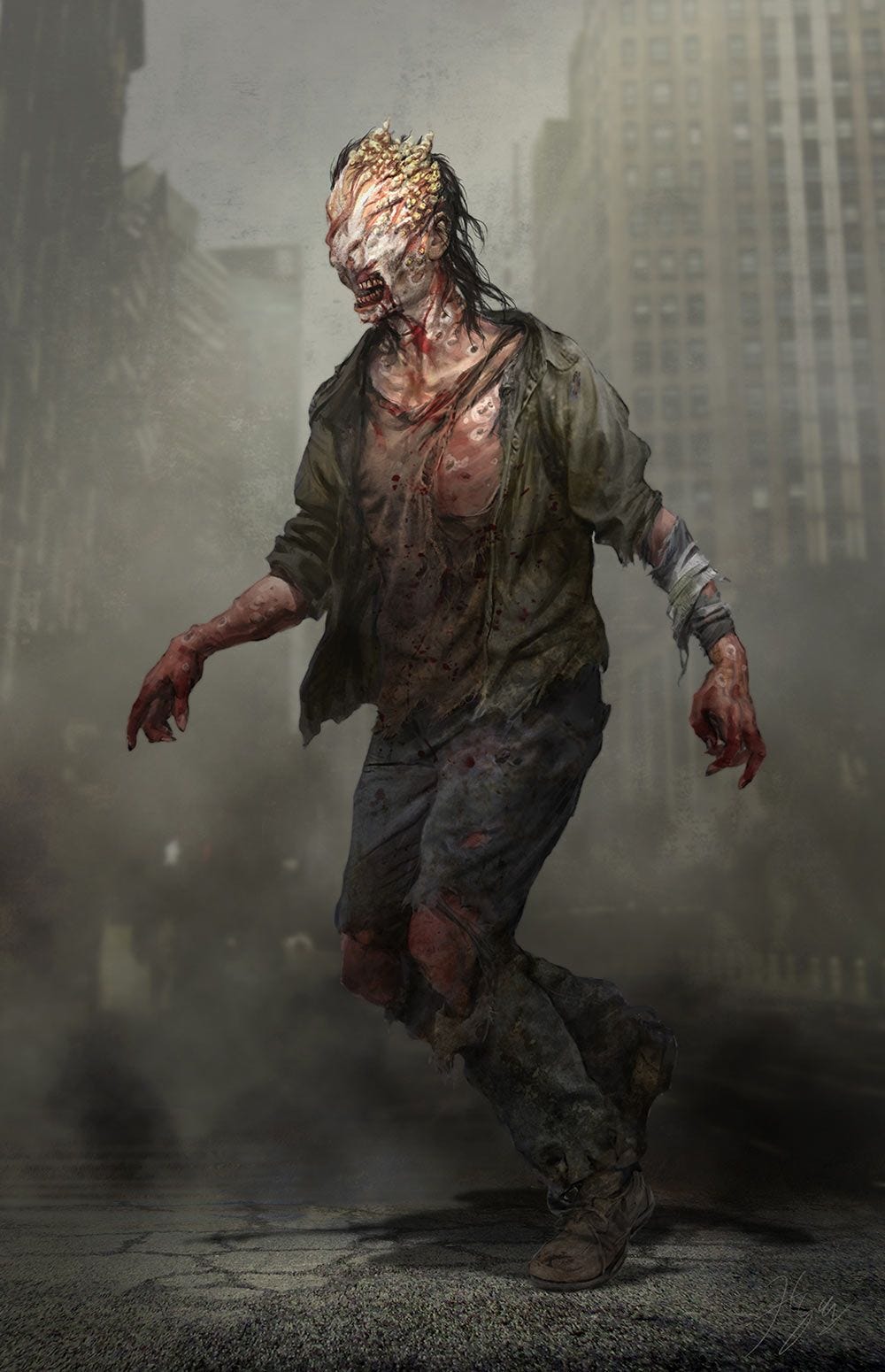
Part II abandons this theme from the first game and transforms the cordyceps infection into a zombie virus. No effort has been made to let them seem like animals with real lifecycle needs. They even travel in hordes now and attack en masse. They wait for passing victims under snowbanks.
These are not infected. These are just zombies.
I never understood how the supply of infected kept growing. The cannibalistic infected would seem to be a self-defeating foe. Whenever someone is infected, they are either eaten, or the infected is killed. That isn’t a good mix for population sustainability!
But The Last of Us was not concerned with the logistics of the apocalypse. And that was fine. It didn’t have to be. It wasn’t about the world. It was about Joel and Ellie.
But Abby’s sections have to be about the world. They aren’t about anything else. How can so much more time be spent focusing on the setting, while the setting gets shallower?
I appreciate that the game has ditched generic human “hunter” enemies and replaced them with factions with personality. But turning the infected into generic monsters misses the point of this world and destroys what made it unique.
Consider the Rat King that Abby fights beneath the hospital. How could this creature possibly really exist? How has it survived in a dungeon with no food for so long? There is no valid explanation for its life. It is not an animal. It is something out of Resident Evil. This creature should never have been put into this franchise.

There Are No Last Names in the Apocalypse
There are no last names in the apocalypse. The characters in the first game do not have last names. This is an excellent aesthetic choice that tells us something important about the world. So few people are left alive that we no longer need last names. The state no longer cares about who you are. It is like the Middle Ages again.
Immediately in Part II, we learn that Joel’s last name is Miller. Then Abby has a last name, too. And everyone has a last name.
Obviously these characters all had last names in the first game. But they did not matter. The story did not care about them. This was one small way the difference between their world and ours could be highlighted.
Joel Miller died in 2013. His phantom, a ghost called Joel, is all who remains.
This was something special about The Last of Us. Obviously, then, it had to be deleted.
The End
I have a version of the ending of this story that could have saved The Last of Us: Part II. It would have brought every theme together and satisfied players of every variety. It starts with Fake Ellie seeking Abby out again. She ends up in Santa Barbara, just like she does in the current game. A prolonged encounter results in resource depletion. When she turns around a corner during a chase sequence, she is grabbed by a fat man with white hair named Gerald.
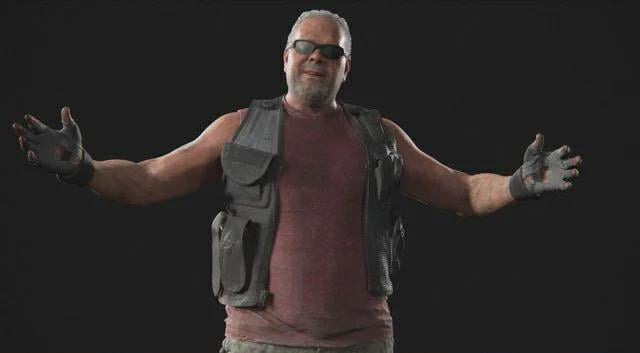
Gerald is a slaver. He laughs, puts handcuffs on her, and tosses her in a cage.
In that cage, Fake Ellie meets a thin and emaciated woman. She is barely recognizable. After a few minutes, she realizes, horrified, that this is Abby. She has been captured, too, and they are now both the prisoners of the Rattlers.
They only have one way to escape: by working together.
For the first time, after thirty hours of conflict and a boss fight, the companion mechanics of The Last of Us: Part II would turn Fake Ellie and Abby into allies. Thus, on the eve of taking her vengeance, Fake Ellie sees the error of her ways. They escape together, then kill Gerald in the game’s final adventure. In the end, Fake Ellie breaks down in tears.
She can never forgive Abby for what she did to Joel. But she finally sees that this has all been a mistake. Seeking vengeance has almost destroyed her, and has destroyed countless others. They part ways, and they never see each other again.
This is obviously how the game should have ended. It would have externalized Fake Ellie’s reason for sparing Abby. It would have mechanized the characters’ relationship in an interesting and compelling way. And it would have avoided a dumb, pointless boss fight sequence that makes no sense.
The actual game comes incredibly close to ending this way. That this is not what Druckmann did is so painfully baffling that I will probably never get over it for the rest of my life.
Instead of this brilliant, humanizing ending, we receive another fight between Fake Ellie and Abby. Abby bites off Fake Ellie’s fingers. A conveniently timed flashback sees Fake Ellie spare Abby through some kind of complicated internalized process. She departs, ruined, with nothing left to live for. The end.
This climax tries to combine a redemptive conclusion with a tragic moral lesson. The result is that it achieves neither, which is why so many players walk away from it feeling utterly betrayed and completely unfulfilled.
Stories have themes. Themes are the moral lessons that the characters must learn in order to triumph over the antagonist at the climax of the story. Failure to learn the theme at the midpoint is what usually leads to the low point, but this low point causes thematic internalization, and thus allows for victory in the end.
In a tragedy, the character fails to learn the theme in time, or does so only after it’s too late. This is why he is punished. Tragedies are about people who make the wrong decisions. In a conventional Hollywood story, a character will learn the theme and be rewarded. She will get the girl, save the day, and win the game.
At the end of The Last of Us: Part II, Fake Ellie makes the correct decision. She internalizes the game’s theme. She breaks the cycle of violence and frees herself from her hatred.
Then she is punished anyway.

Redemptive stories are completely different. A character seeking redemption must somehow atone for past crimes in a direct moral sense. Anakin Skywalker is redeemed by chucking the Emperor down a giant pit because, even after decades of being evil, he realizes that he must save his own son—because his own son was determined to save him.
The tragedy of Darth Vader is not that he dies. His death is well-deserved. The tragedy is that he once fell at all.
Redemption requires positive action, not mere revelation. Revelation is necessary but not sufficient to redeem a character. Yet we are meant to believe that Fake Ellie is redeemed because of a randomly intercut revelatory flashback to Joel that she does nothing to earn. This flashback happens to her. When she lets Abby go, she is not doing something: she simply does nothing. Remember, she started this encounter. She is the one who put a knife to Lev’s throat. Abby did not want to fight.
Neil Druckmann wanted sparing Abby to be Fake Ellie’s atonement for her mistakes over the course of this game. But while Fake Ellie’s fingers are taken from her, she gives nothing. There is no redemption.
This must instead be the substantive culmination of Fake Ellie’s tragic fall. That is what it appears to be. And The Last of Us: Part II could have been a tolerable, albeit very boring and sloppily told, revenge story if Fake Ellie had gotten what she wanted at the cost of all she had. This is what happens to Hamlet and Sweeney Todd and most revenge antiheroes who go on killing sprees. They are beyond absolution, and Fake Ellie kills more people than any of them.
But that isn’t what this scene is. Fake Ellie doesn’t get what she wants and still loses everything she had. In the end she’s left with nothing at all. Moreover, her worst fear has now been realized: she is totally alone in the world, with no one with her and nothing to fight for.
This isn’t a redemption, because Fake Ellie doesn’t sacrifice or offer anything willingly. And it isn’t a tragic fall, because Fake Ellie learns the lesson in the end. It is neither thing. It is nothing. This scene is a total failure on every dramatic level.
Apologists for Part II will say that Fake Ellie really did get what she needed: she learned to forgive Joel. This was probably Druckmann’s intention, but there is not and never will be a satisfactory explanation for why this happens while she is in the middle of choking Abby to death in the Pacific Ocean, sans two fingers, and not vastly earlier or immediately later. It is a dead interpretation anyway because it makes no sense as a reading of her character from the first game. Even if it did make sense, though, it would still be a confusing and arbitrary internalized process. It is happening only inside of Fake Ellie’s mind.
We do not see the inside of her mind. This is not a novel. This is a video game. The most important moment of the story must happen in the actual world, not in someone’s soul.
John Marston realizes the law will never stop pursuing his family. He has this revelation and allows himself to be sacrificed; thus he is redeemed through a final brutal, bloody shootout in the physical world.
Fake Ellie forgives Joel in her soul.
Do you get it?
Fake Ellie finally killing the now-familiar Abby would have been the perfect miserable ending for this incredibly miserable game. It would have left us feeling hollow, which is the point of a good tragedy. But Druckmann could not stand to do it. This effectively inverts the intended moral lesson of the game. Sparing Abby completely ruins the entire story that Neil was trying to tell. By having Fake Ellie be so severely punished for learning the theme, the ending communicates nothing except an apparent condoning of violence. There is no other coherent moral reading of this ending. If sparing Abby results in tragic punishment, it must have been a mistake.
Besides, Abby never learned this lesson about the futility of seeking revenge anyway. She killed Joel and got away with it. When she spared Fake Ellie at the theatre, it was because of Lev’s outside influence, not any kind of moral revelation. Yet she is the one who walks away with the (relatively) happy ending. At least she keeps all ten fingers.
This is all for nothing anyway. The “cycle of violence” hasn’t actually been broken by their final confrontation. Fake Ellie and Abby’s cycle has, but what’s stopping Neil from retconning any number of random NPCs into having vengeful daughters in the next game? There are so many people with dead family members who surely still want to track Fake Ellie down, right? In Part III, is Nora’s brother is going to come looking for revenge? He doesn’t care that Ellie spared Abby. Why would he?
The way that Part II is written practically necessitates that it is written once again. Another NPC’s daughter must be retconned into the plot to seek out Fake Ellie and enact vengeance. It happened before; it shall happen again, ad infinitum.
No one thought this through.
What Went Wrong?
So much went wrong with this game that a man could spend the rest of his life analyzing it. Perhaps some men have. I would like to move on. To conclude these three essays, I want to ask how it happened.
I do not think it is a difficult question to answer. I believe this game came out so poorly in so many areas because Neil Druckmann was made VP of Naughty Dog. This is a far greater concentration of creative and financial power than will be found in basically any Hollywood project. Perspective is mandatory for creating a good product. Very few auteurs are capable enough to handle every lever of power on their own.
Game development is much more collaborative than filmmaking. A single studio must coordinate multiple disparate disciplines into a single cohesive vision. Bruce Straley did this alongside Druckmann to incredible effect. But he departed after Uncharted 4, and Druckmann was left in complete control of the studio’s projects.
Because he was VP, no one could question his decisions. That is how movies like The Room are made.
Even the best creatives need external forces to filter out the bad ideas. Giving your director full creative control means that all of the bad ideas get thrown into the pot, even if everyone else realizes that he’s making a mistake. There are few geniuses great enough to withstand this force.
The Last of Us: Part II is not a good game. It does not tell a good story. It does not truthfully follow up on the characters of Ellie and Joel. This is our reality. We will have to live with it, and get on with making our own good games instead.