

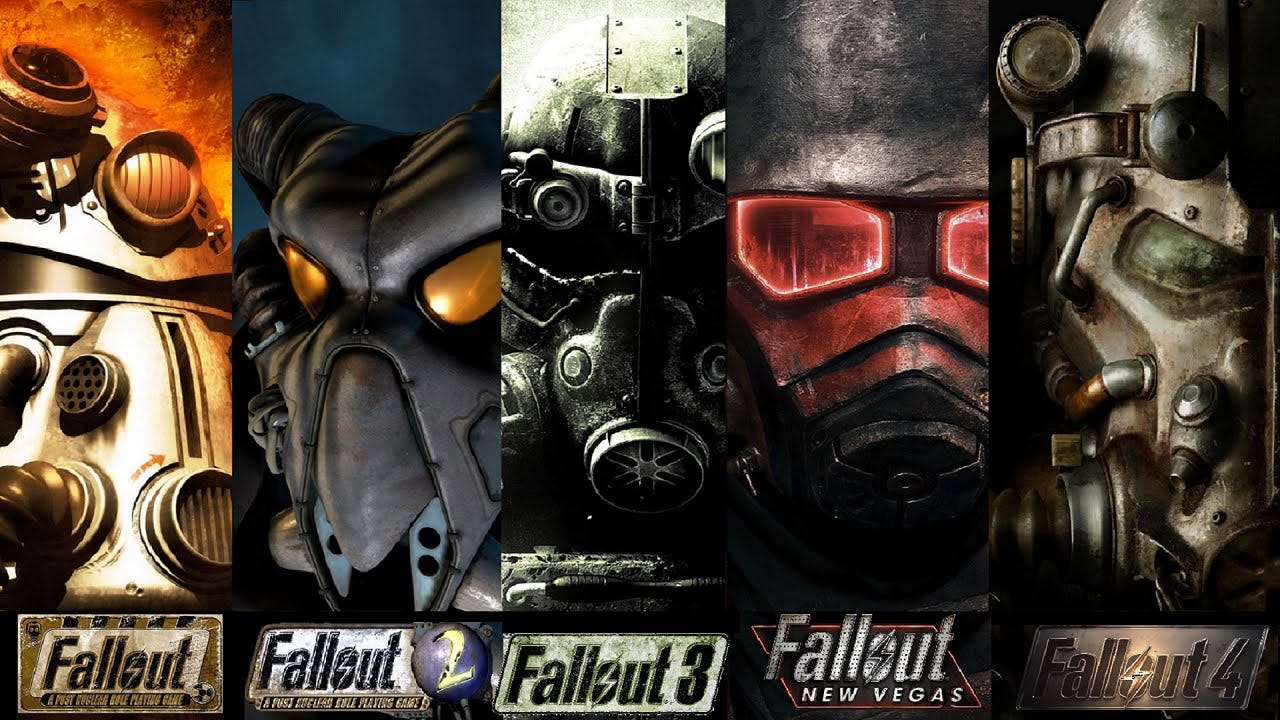
With Constraint on my mind after finishing Dragon Age: Inquisition, my eyes turned toward Fallout. I decided my next task of RPG analysis would be to beat every (roleplaying) game in the Fallout franchise within the space of a single month.
After 27 days, I have finished Fallout 4. Now it’s time to review the main series.
Before I get started, I want to say that I had played every game in the franchise at some point. I had never finished the original two games, but I was intimately familiar with both. It had been upward of a decade since my last full playthrough of 3, nearly as long for New Vegas, and about five years for 4. I was not approaching this series as a first-timer.
Fallout: A Post Nuclear Role Playing Game (1997)
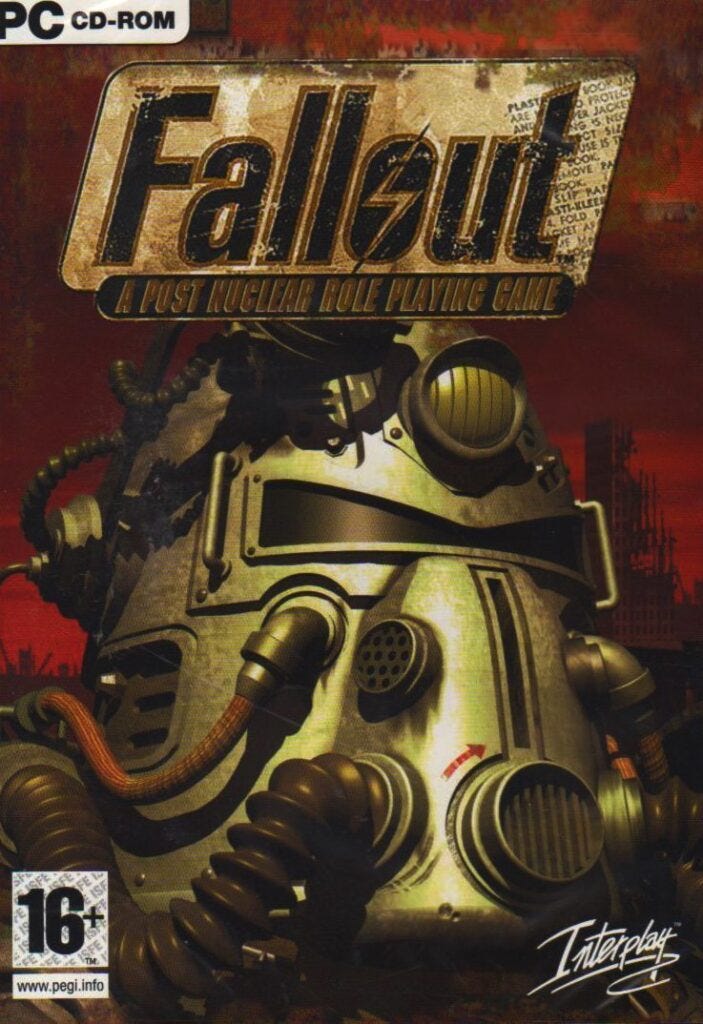
The original Fallout: A Post Nuclear Role Playing Game was released by Black Isle in 1997. This was a full year before Baldur's Gate, which was BioWare's first real game. I want to compare these two RPGs to illustrate why Fallout must have been an extraordinary experience at the time of its release.
I made up my mind to beat Baldur's Gate for the first time in lockdown. I didn’t manage to do it, though I got close, because Baldur's Gate does not hold up. Its narrative is extremely thin. The companion characters have nothing to them beyond a catch-phrase, play no role in the story, and the story itself is barely more than a framework for dungeon crawling. Speech is never a substitute for murder; every quest ends in combat, regardless of your decisions. In fact your decisions don't matter at all. I understand why so many people have nostalgia for this game, but it is primitive, even relative to its sequel.
Despite being a full year older, Fallout does hold up. The GURPS-inspired combat is not a highlight, and its companions are not even worth mentioning.
But its narrative is excellent. The designers guide the player deftly through the enthralling retrofuture post-apocalypse without the need for gigantic quest marker arrows like later titles in the series. You are taken between interesting factions and locations, introduced to memorable and distinctive personalities, and given compelling quest objectives at every new turn. Helping others helps you help yourself, eliminating apathy, and the time limit keeps you focused and gives a real incentive to earn caps. Every quest has multiple resolutions, and combat is usually avoidable.
Most vitally, your choices matter. This is a game that respects your agency (even if many of your choices, like telling people about Vault 13 or joining the Master, result in game overs).
Fallout is not a big game. It can be completed in ten hours. But it is deep. It still, really, holds up. This is a modern Unconstrained RPG in design, and it came out at a time when it was competing with Ultima.
Of course it has aged poorly in many areas. I couldn’t beat the final two missions until I looked up what was wrong with a guide; it turns out you need to euthanize Dogmeat to sneak into the Master’s lair. The art design is good, but the graphics are very hard to read on modern monitors, and almost anything at all would have been better than the combat system the game actually has.
But these are small complaints when the game has such a compelling world, with such a good story.
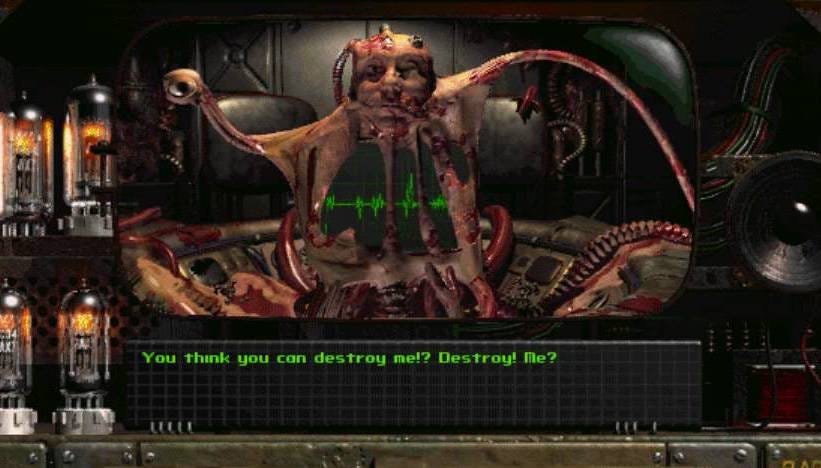
The only thing I don’t like about Fallout’s story is that the Master is only in it for mere minutes. He is the series’ best antagonist, and he deserves another game.
In terms of consistent, overall quality, I believe that Fallout: A Post Nuclear Role Playing Game is the best game in this franchise, and one of the best games ever made. If you have not played it because it is old and looks like shit, try anyway. You might just love it.
Fallout 2 (1998)
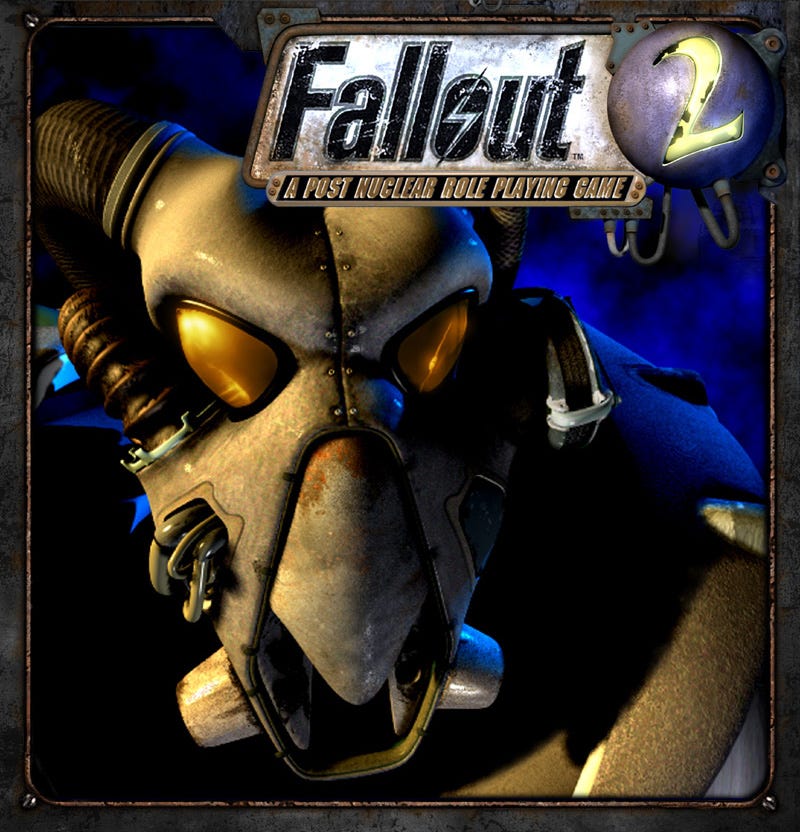
Conventional franchise wisdom will say that Fallout 2 is better than its predecessor. After all, it's basically the same, except more. Most fans hold this opinion. This was certainly the opinion in my house growing up.
Unfortunately, I think Fallout 2 is horrendous. I will say confidently that it is the worst game in the series, even worse than 4. I don’t think the reasons why will be especially controversial.
Humor
Fallout 2 is a comedy game. While the first game has moments of surreal or zany humor, 2 is literally an over-the-top comedy. Every other line is a joke or a reference. The vast majority of these references, from the year I was born, have aged horribly and now mean nothing. Sometimes quests depend on knowing the reference to pick the right answer, which basically makes the game unplayable over twenty years later.
I like it when games have humor in them. Absurdity with drama is fine. But 2 goes way too far. Not only is the humor excessive, it isn’t funny. The tonal anarchy completely ruins this game. There are Monica Lewinsky jokes, Doctor Who references, Star Trek callbacks, The Silence of the Lambs quest chains, frequent phallic allusions, and I do not know what else ravaging this script.
But 2 would probably be bad even if it hadn’t been a bad comedy.
Combat
The combat that was trivially easy in 1 has now been balanced. This is to say that it’s still horrible and tedious, but now requires more thought and preparation. This is not a good change.
Bugs
Fallout 2 was famously developed over the course of two weekends at Brian Fargo’s house. Despite playing a version of the game that has seen over two decades of fan patches, it was still riddled with game-breaking bugs. I almost could not beat it.
Narrative Design
The main problem with 2 is actually its story. I think many of the people who hold it in high regard never made it past the opening section, and it is true that the game’s opening is strong. Up until the player reaches Vault 15, 2 is almost as good as 1.
After Vault 15, this game is a nightmare.
I wanted to have high karma this playthrough. That meant the Khans would not talk to me. I managed to use Speech to get past them and recover the computer chip, and I brought it back to Tandi. It was purely a coincidence that I had found it: I did not know beforehand that she had wanted it.
I gave it to her, and she kicked me out of her office, refusing to ever speak with me again.
Apparently this is a bug. She should have had more to say. Instead, I received one line from Tandi and nothing else, ever.
At this junction I had no notion of where to go or what to do. The main quest was completely over. My only option was to talk to every single NPC in the entire game until I found the right one, or to pull up a walkthrough.
It’s a good thing I did, because I never could have finished the game without it. The consequences of each dialogue option are never clear. Most quests involve going to some specific NPC somewhere and saying only one specific thing to him. If you don't say that thing, such as with the bomber in NCR or the spleen doctor in San Francisco, the game won't tell you you've fucked up. Yet I assure you, you have fucked up. If I hadn't known I had fucked up because I was using a guide, I would have had my progress forward barred for no discernible reason.
The steps required to complete quests are totally illogical. The game will send you to Harold to retrieve the yellow card for Gecko’s reactor. But Harold doesn’t have the key. He knows nothing about it and won’t mention it when interrogated. Apparently it’s hidden somewhere in his office. You’d think that’s the sort of thing he’d want to talk about when you used the “Question” feature!
Many of these problems are due to the undeniable fact that the game was badly rushed. As a player, the result is that the quest design is just bad. The writers’ logic is impenetrable, and you will need to know the answer if you want to guess the right question.
I Wish I Liked Fallout 2
The lack of narrative Constraint in Fallout 2 is amazing. The world feels alive and reactive. The Enclave is a great antagonist faction. But the quests totally ruin this game. My guide basically played the game for me. I never needed a guide in 1, except to resolve the Dogmeat glitch at the very end.
Fallout 3 (2008)
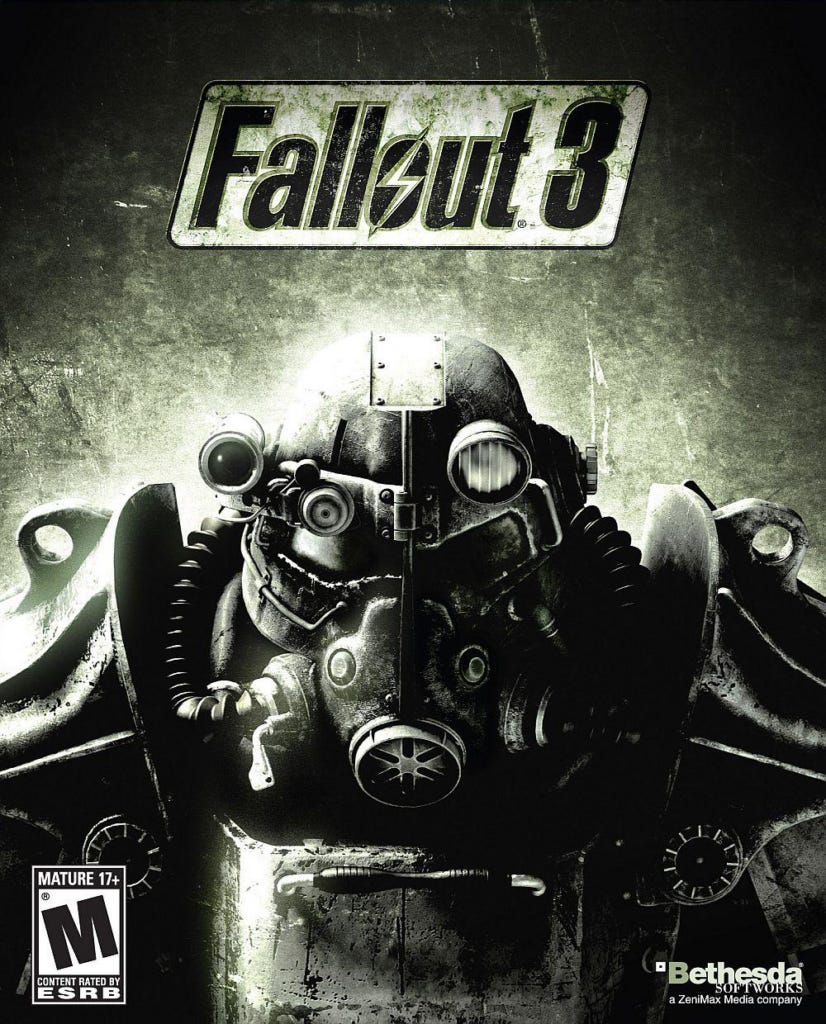
The first two Fallout games were developed by Black Isle and published by Interplay. Fallout 3 was developed by Bethesda and published by ZeniMax.
I don’t like Bethesda’s games. I think they succeed in atmosphere and nothing else. But I do like Bethesda’s Fallout games, and I especially like Fallout 3.
The Bomb Parable
I decided to stop by the town of Megaton while on the road to find my father. Megaton was built around an enormous undetonated nuclear bomb--hence the name--and as I visited the local saloon, this bomb always remained in view.
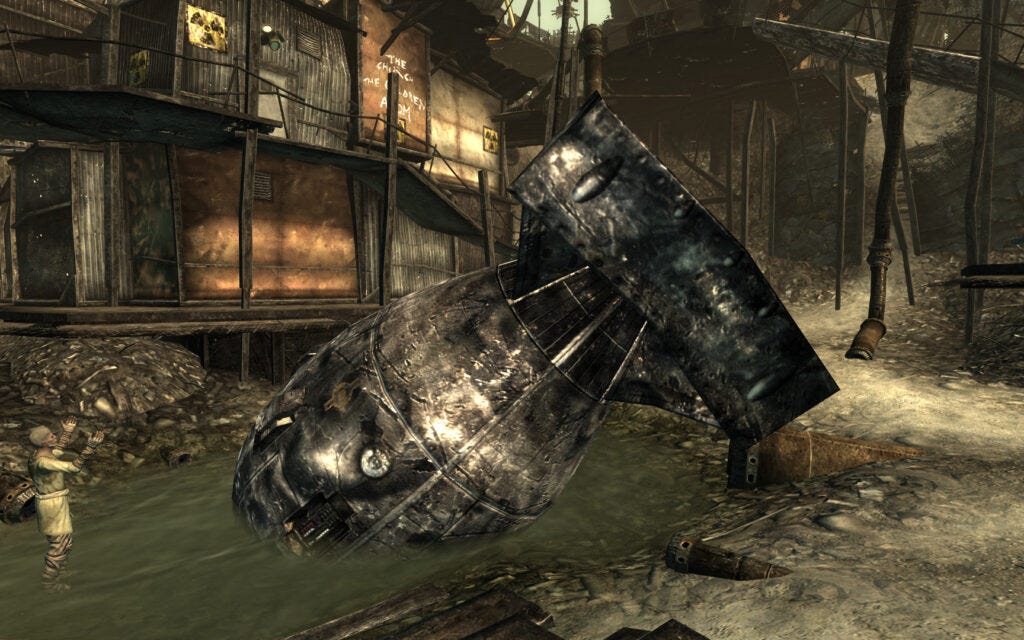
At the saloon a man of dubious morality asked me to rig this bomb to explode, in an effort to clear land for a new hut development tract. He would pay me a few hundred caps for the job, which, destitute as I was, was a tempting offer.
But I was playing Wasteland Jesus. So I accepted his offer, then immediately reported him to the town sheriff. In an act of valiant and selfless heroism I then permanently disarmed the bomb. It only took 25 Explosives skill. Just that easily, Megaton was saved.
This quest is not remarkable. It is good by Fallout standards and excellent by Bethesda standards, but it is comically black-and-white and very simple. Nearly everyone who plays Fallout 3 will have the same experience while exploring Megaton. The events merit no further discussion.
But something interesting happened next. An hour or so later, as I wandered my way toward the ruins of D.C., I heard the voice of radio jockey Three Dog pipe up over my Pip-Boy:
“Got some great news out of the town of Megaton. Turns out that live atomic bomb in the town’s center has finally been deep-sixed for good. The town’s sheriff, one Lucas Simms, commissioned the one, the only lone wanderer from Vault 101 to disarm the nasty nuke, and the kid delivered. Hey, nice work 101. Next time you’re in the neighborhood, pop into the studio. Ol’ Three Dog’s toaster’s been on the fritz.”
Hey wait, that’s me! Three Dog is talking about me! The game noticed what I did!
Fallout 3 uses Three Dog to report on the player’s activities. He comments on your karma level, whether you’ve completed certain quests, and makes you feel like you’re making a difference. He gives you a sense of agency in this world, so that you feel like your actions really matter, and that you are not just stuck in a video game.
3 is not as good at being Unconstrained as the Black Isle games. There are NPCs who are invulnerable for no reason, and the main quest is very linear. But what it does better than any other entry in the series is cultivate the sense of player agency. Three Dog is watching over your shoulder, and his eyes keep you from acting erratically. Because if you blow up that bomb, if you slaughter that town, if you do that next evil deed, you know he will notice—and for that one moment, your actions will have consequences.
And if you get sick of that and decide to kill him, then his voice won’t air on GNR anymore. That’s its own kind of consequence, too.
But the game respects agency in other ways. NPCs notice your actions. If you have high karma, you will receive comments on how cool you are. Paladins in the Brotherhood of Steel will tell you that they are honored to be in your presence.
You know what? They’re goddamn right. My presence does honor them. I’m glad they noticed.
3 really does care about the decisions you make. Those decisions are more Constrained than in 1 and 2, but they seem to matter more. Of course agency is always an illusion. Nothing actually matters in a video game. The only question is how much you feel like what you’re doing makes a difference.
When you blow up Megaton and every character in the setting notices, it feels amazing. Suddenly everything you do going forward has weight.
There are things I dislike about 3. I don’t like the main quest, and I don’t like the stupid family melodrama. A lot of the dialogue is bad. The gameplay is not exactly stellar as a first-person shooter. But this is still Bethesda’s best game. We can laugh all we want about how anemic Colonel Autumn is as an antagonist, especially compared to Frank Horrigan or The Master, or that it’s lame the Enclave is back for some reason, but 3 is a game with excellent narrative design. The writing varies, but this attention to player agency is nothing short of brilliant. It’s honestly hard to believe that the same company that brought us “arrow to the knee” and “that won’t be necessary” also came up with Three Dog. But they did, and credit goes where credit is due.
I love this game. It has a compelling world filled with interesting places to explore, and it feels incredibly alive. I’ve completed it to 100% at least three times, and I still want to keep playing. Like all of Bethesda’s games, it has good atmosphere, and it also introduced a generation of gamers to some great old music.
Fallout: New Vegas (2010)
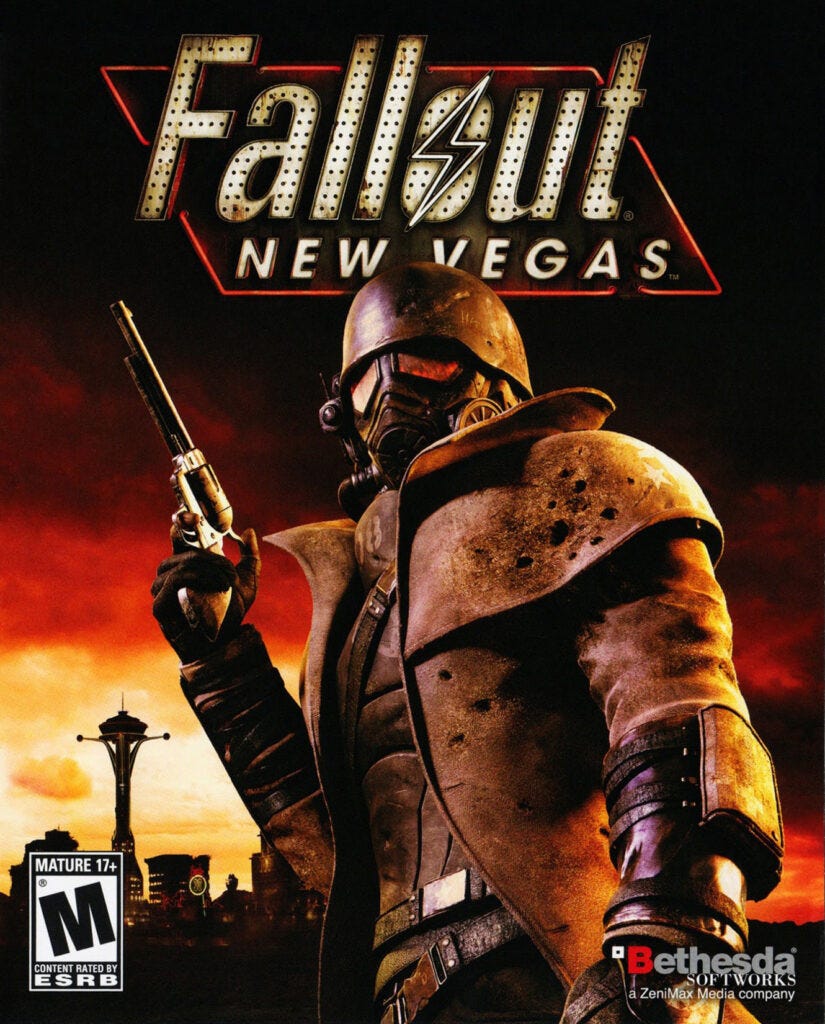
New Vegas is the most Fallout of the Fallout games. It is the least Constrained game in the series, in a series that I believe to be fundamentally about player agency and a lack of Constraint.
But it’s also the most popular Fallout game. You have almost certainly played it yourself, and watched one of the infinity of online video essays that have been posted analyzing it. I know that it is the game I have played by far the most out of the five being discussed here. What is there to say about it?
New Vegas brings humor back to the wasteland without going overboard like 2. This game has the perfect balance of seriousness and silliness. It also has an excellent main storyline and a fantastic sandbox open world. But worldbuilding is what it truly excels in. Fallout does not succeed as a franchise because of the strength of its writing. The writing has varied wildly in quality between titles. Instead it succeeds on its aesthetic, its thematic link to Westerns, and its ability to tell so many different types of stories.
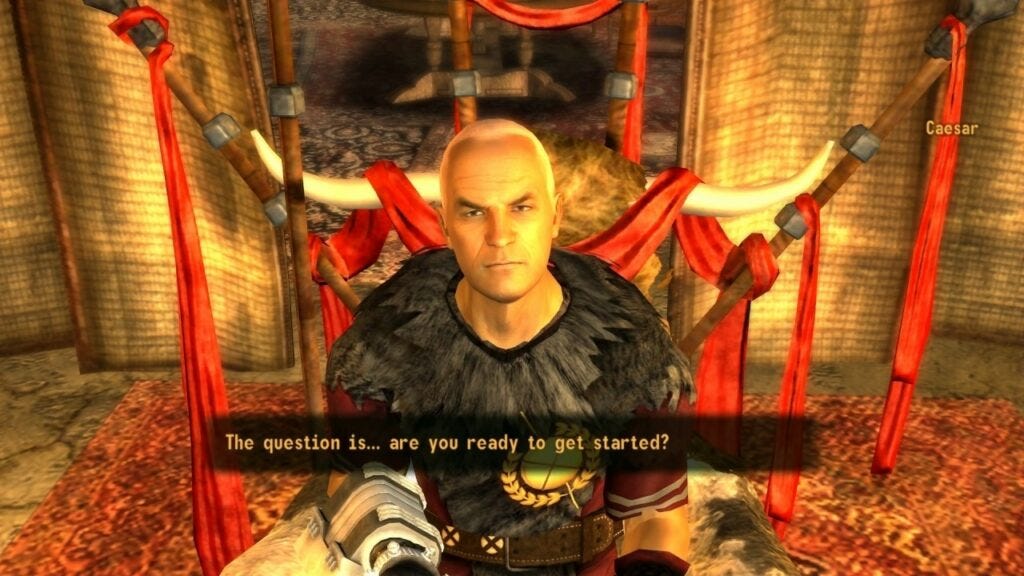
This game is a Western, and it’s also science fiction. But there’s also pulp adventure, noir, real-world politics, horror, and people dressed in ancient Roman costumes. All of these things fit together in this world, which means a huge variety of different stories can be told side-by-side. This is much like with Star Wars, but with the added benefit of being set on Earth.
This is why so many games today seem to be chasing Fallout, and all in futility. The Outer Worlds, developed by many people who helped create Fallout in the first place, feels like a shallow imitation, because it copies the original aesthetic without replicating the versatility of the Western. The result is a world that feels hollow.
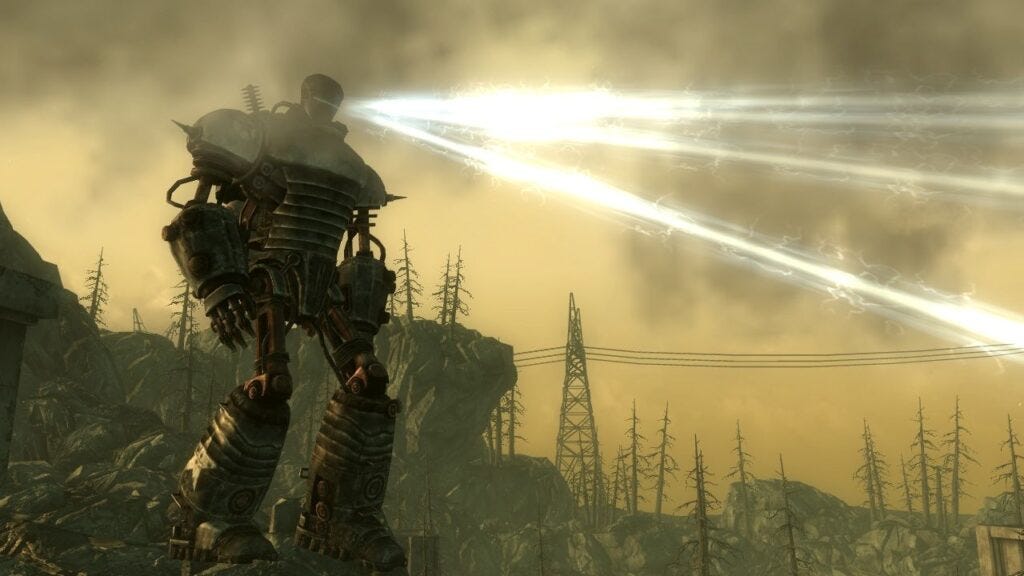
I didn’t enjoy my latest playthrough as much as I expected to. The reason is that there is no mystery left to explore. The first time one explores in a Fallout game is enchanting. There is so much to see and find. You never know what insane thing you might see around the next corner, like a giant Communist-crushing robot or Long Dick Johnson’s enormous scrap statue or a cyborg dog or a bunch of psychopaths cosplaying as Romans. What other game has so much variety in stuff to find?
Yet these things are so memorable that one tends to remember them. I hadn’t played New Vegas to completion in nearly a decade, but I remembered everything about it. I knew where to go and in what order. I knew every location on the map.
For some games, like Dragon Age: Origins, knowing the course doesn’t diminish the experience all that much. It’s the great irony, then, that the amazingly Unconstrained New Vegas, so full of branching paths and replay value, is actually less replayable than its Constrained BioWare alternative. The fun of Fallout is scouting the map and meeting the factions. This is why 4 works, even though the character writing is, without question, bad.
If you already know the map, the magic fades.
I still enjoyed New Vegas, but this playthrough shows one downside of writing games about places instead of people. Morrigan’s arc in Dragon Age: Origins is always satisfying. But once one knows every nook and cranny of the setting of the Mojave or Capital wastelands, there is no real joy to be had in exploration.
But I’ve also played the game for over three hundred hours across three different game systems. So I think it’s safe to say that I’m okay with that.
Fallout 4 (2015)
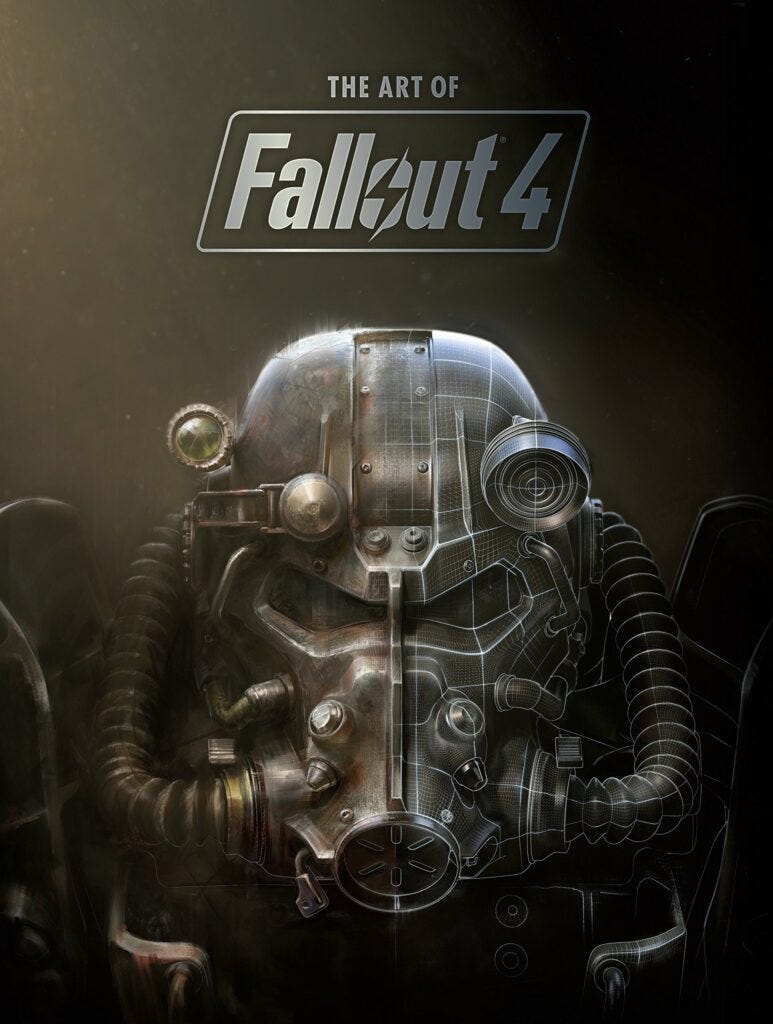
I won’t pretend otherwise: I like Fallout 4. I think it is a good game, filled with incentives and well-designed systems. The removal of skills was the right decision. The changes to power armor really, truly make you feel like a walking tank. The new crafting systems give a reason to care about exploration and are also engaging in and of themselves. The map is full of interesting locations and engaging combat encounters. And above all, the gunplay is satisfying. Fallout 4 is the first Bethesda game that’s actually fun to play!
In short, Fallout 4 is a great open-world action game.
Fallout 4 is not a good Fallout RPG. Everyone knew that already. The dialogue is astonishingly bad. The attempt at a branching narrative is humiliating. When I replay it, I skip through everything and ignore the sidequests. This is not the way to enjoy the previous four entries in the series, but it’s the only way to enjoy 4.
And it works. When I play 4, I do enjoy it.
While the writing is poor, Bethesda did attempt to create an Unconstrained RPG in the style of Fallout with 4. There are very few invulnerable NPCs; you can murder the entire BoS and your own son, unlike in 3. The Minutemen are invulnerable, and so are some of the companions. But at least they tried.
We all would have preferred 4 to be more like New Vegas. Bethesda was never going to make that game. You should be happy you got anything fun at all.
Patrolling the Mojave….
Long ago there was a meme from Skyrim about arrows going into knees. This meme was utterly inescapable for years, until, one day, it disappeared. Many of us still remember the Arrow to the Knee joke, but no one ever mentions it anymore.
But even though Fallout: New Vegas is older than Skyrim and has never been re-released, its memes live on. Patrolling the Mojave has been making us wish for nuclear winter for over a decade. I doubt it will stop any time soon.
There is a reason why these games, despite all their many flaws, have such staying power. Now I just hope we get another one before I die of old age.